The useful part first
Key takeaways
- Sewer rodding is a mechanical clearing service for a blocked main sewer line, not a repair for a broken pipe.
- If more than one drain is affected, the main line deserves attention before you keep testing fixtures.
- Access matters. A cleanout can make the work simpler, but it is not safe to open one if the line is pressurized or actively backing up.
- Antioch’s Public Works notification requirement is a useful local step before sewer-line work begins.
If wastewater is backing up, pause water use and do not run fixtures to recreate the problem. That keeps more water from entering the line while you sort out the next step.
Sewer rodding is a practical option when a main line is obstructed by soft buildup, paper, sludge, or small root intrusion. It uses a cable with a cutting or clearing head to restore flow through the pipe.
This kind of work is different from fixture drain cleaning, camera inspection, or hydro jetting. If the backup looks limited to one sink, tub, or toilet, the service choice changes. If several drains act up together, a main line problem is more likely.
The Village of Antioch asks property owners to notify Public Works before work on any sewer line, so municipal instructions should be checked before authorizing work on a private lateral or making assumptions about where the issue sits.
What sewer rodding covers
Sewer rodding clears a blockage by working a cable through the line until the obstruction breaks apart or the passage opens enough to move wastewater again. It is commonly used on main sewer lines because the blockage often sits where multiple fixtures share the same route.
It is a clearing service, not a promise of a repaired pipe. If the line is cracked, offset, sagging, or separated, the rod may restore flow for the moment without solving the underlying condition.
It also is not the same as snaking a sink or tub drain. A main line has different access points, different branch connections, and a different set of clues about where the obstruction sits.
For homeowners, the useful question is whether the problem looks like a shared-line issue. Slow drains at several fixtures, gurgling across rooms, or waste appearing where it should not all point in that direction.
- Good fit: a backed-up main line with suspected buildup or roots.
- Less useful alone: a single slow sink with no other symptoms.
- Not a repair: damage, collapse, or recurring offset joints.
- Often paired with: inspection when the cause is unclear or keeps returning.
How it differs from related services
A drain-cleaning visit usually focuses on one fixture or a short branch line. Sewer rodding reaches farther into the main line and is aimed at restoring whole-home drainage.
A camera inspection answers a different question: what the pipe looks like and where trouble may be located. If you want to understand the pipe condition after clearing, camera inspection is the separate service that fits that conversation.
When rodding makes sense
Rodding makes sense when the sewer is blocked by material that a mechanical cutter can move. That includes sludge, paper accumulation, some grease buildup, and some root growth. The method can also help when you need access through a longer run and the line is still intact enough to pass the cable.
It is often the most direct first step when the line is simply plugged. If wastewater is rising at multiple fixtures, there is a decent chance the blockage is in the shared sewer line rather than in one isolated branch.
Rodding is less satisfying when the line keeps closing again soon after clearing. In that case, the question shifts toward pipe condition, root entry points, or a section that is narrowing or misaligned. A follow-up look, such as the options described on sewer rodding, can help you sort out what the cable can and cannot tell you.
The service also depends on access. Some homes have a usable cleanout. Others require the contractor to work from a different entry point, which changes setup and may affect how much line can be reached.
- Best when the line is blocked but still passable.
- Useful for common obstructions and light root intrusion.
- Less conclusive if the blockage returns quickly.
- Depends on access, line layout, and pipe condition.
Access and pipe condition matter
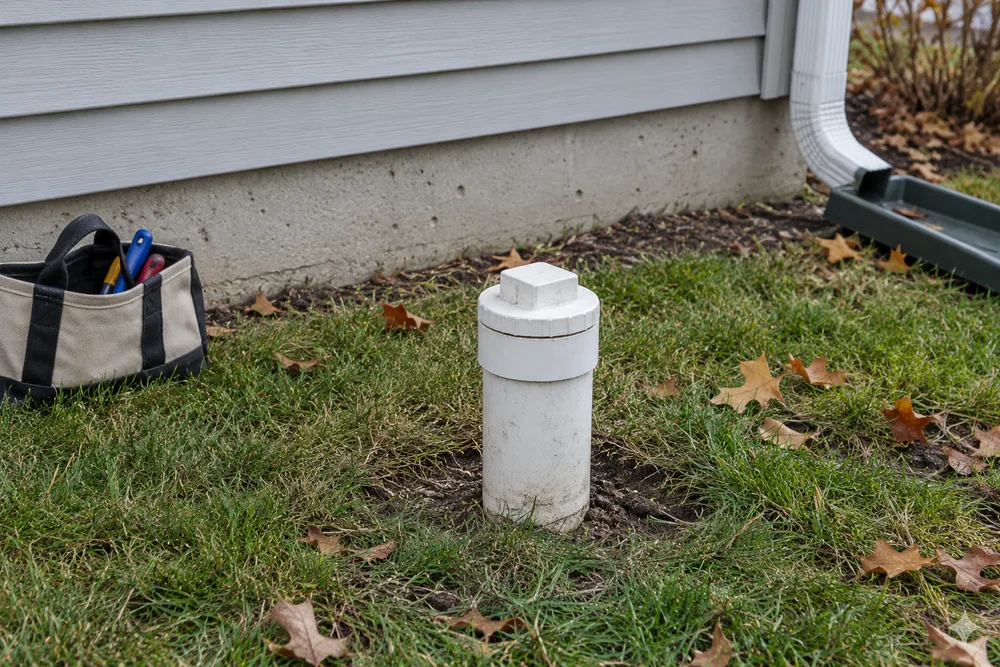
A cleanout gives a contractor a direct route into the sewer line, which usually makes the work cleaner and faster to set up. If a cleanout is missing or hard to reach, the contractor may need another approved access point.
Pipe condition matters too. A rigid cable can clear debris, but it cannot make an offset joint straight or seal a cracked section. That is why a successful clearing and a healthy pipe are not the same thing.
Water backing up now?
Pause water use and call. Emergency calls are accepted 24/7.
An example of access and pipe condition
For example, suppose a basement floor drain starts backing up after a toilet flush, and the home has a reachable cleanout near the foundation. If the line is full of soft debris and the pipe is otherwise open, rodding may restore flow with limited disruption.
Now compare that with a different situation: the cleanout is difficult to reach, the cable stops at the same point more than once, and a camera later shows an offset section with root intrusion. In that case, the rodding may still clear the immediate blockage, but the pipe condition will keep shaping what happens next.
The access point changes the setup. The pipe condition changes the outcome. Those are separate questions, and they often need separate answers.
That is why it helps to describe what you saw, where water came up, and which fixtures were affected before you book the visit. A clear symptom description helps the responding contractor decide whether rodding alone is the likely first move or whether inspection should follow soon after.
- Same symptom, different access can mean different setup.
- Same blockage, different pipe condition can mean different next step.
- One clearing does not prove the line is in good shape.
- A later inspection can explain repeat failures.
What to mention when you call
Say which fixtures were affected, whether the problem spread across more than one drain, whether you noticed gurgling or odors, and whether there is a cleanout you can see. If wastewater is actively backing up, keep the focus on the event and stop using water until help is arranged.
What usually happens during the visit
The contractor usually starts by hearing the symptom history, looking for the most sensible access point, and checking whether the issue looks like a fixture problem or a main-line problem. Then the line is cleared from the appropriate opening and tested by running water carefully after the blockage moves.
Expect a short conversation before any tool goes in the line. That conversation should cover access, what has already happened, and whether the backing-up seems active or has settled down.
If the line clears, the next step is to confirm that drains are moving again without forcing a lot of water through the system. If the contractor finds signs that the line keeps hanging up, a camera inspection may be the follow-up worth discussing.
If you need a broader look at the visit itself, the general service visit guide explains what the onsite sequence usually feels like without turning it into a full sewer diagnosis lesson.
- Symptom review comes first.
- Access point choice comes next.
- A controlled test follows the clearing.
- Repeat trouble often leads to inspection discussion.
What not to do while waiting
Do not keep flushing, running laundry, or filling tubs just to see whether the backup changes. That only adds water to a line that may already be full. If wastewater is returning, the safest practical move is to stop introducing more of it.
How rodding compares with other options
Rodding, inspection, and jetting solve different problems. The choice depends on whether the line needs to be opened, explained, or thoroughly cleaned. A homeowner does not need a technical debate to start the process, but it does help to know what each option is trying to accomplish.
Rodding is for clearing a blockage. Inspection is for seeing the pipe. Jetting is for heavier cleaning of line walls and debris. Those differences matter when a clog comes back or when the line seems open but still behaves badly.
If the line is backed up in more than one place, the comparison on fixture clog or main sewer blockage can help you think through whether the issue is localized or shared. If the pipe has repeated buildup or roots, jetting or root-focused service may be discussed after the initial clearing.
The Village of Antioch also notes that Public Works should be notified before work on any sewer line, so any plan for the line should be made with that local requirement in mind. That does not replace contractor judgment, but it is part of the process here.
- Rodding opens a blockage.
- Inspection explains what the pipe condition looks like.
- Jetting is stronger cleaning for certain buildup patterns.
- Local notification before sewer-line work is part of Antioch’s process.
When another service may be a better fit
If the line is not clearly blocked but the symptoms keep returning, inspection becomes more useful because the problem may be structural or root-related. If the issue is clearly a one-fixture drain, a smaller drain-cleaning service may be more appropriate than main-sewer rodding.
What to have ready before you request service
Before you reach out, note the fixtures that were affected, whether water came up in the basement, and whether the backup seemed sudden or built over time. If you have a cleanout location in mind, mention it, but do not try to open a backed-up or pressurized cleanout yourself.
Good notes save time and reduce guesswork. A short description of where wastewater appeared is more helpful than a long theory about the cause.
If you are comparing service types, you can start with rodding, jetting, or inspection depending on whether you need clearing, a stronger wash, or a look inside the line.
For Antioch sewer-line work, remember the local notification point as well. If you are unsure whether the line is private or public, ask that question before any work is authorized so the right party is contacted.
- List the affected fixtures.
- Note whether the backup is active or has settled.
- Mention any visible cleanout without opening it.
- Ask about the likely next step if the blockage returns.
A quick decision framework
If you need the line opened now, rodding is the usual starting point. If you need to know what the pipe condition looks like after that, inspection follows. If the line is coated or heavily loaded, jetting may be discussed. The service conversation should move in that order, not the other way around.
What each sewer service does
| Service | Best use | What it does not do |
|---|---|---|
| Sewer rodding | Mechanical clearing of a blocked main line | Does not repair broken, offset, or collapsed pipe |
| Camera inspection | Shows pipe condition and problem location | Does not clear a blockage by itself |
| Hydro jetting | More aggressive cleaning for heavy buildup | Does not fix structural damage |
| Fixture drain cleaning | Handles one sink, tub, shower, or toilet line | Does not address a shared main-line backup |
Questions homeowners ask
How do I know if I need sewer rodding or just a drain cleanout at one fixture?
If only one sink, tub, or toilet is acting up, the issue may stay within that fixture branch. If several drains slow down, gurgle, or back up together, the shared sewer line is more likely involved and rodding becomes a better fit.
Can sewer rodding fix roots in the line?
It can cut through some root intrusion and restore flow, but it does not remove the entry point or repair the joint that let the roots in. If roots keep returning, a camera inspection and a longer-term plan are worth discussing.
Should I keep testing fixtures after wastewater starts backing up?
No. If wastewater is coming back up, stop running water and do not keep flushing or cycling fixtures to see what happens. Adding more water makes the backup worse and can spread the mess.
Do I need to know where the cleanout is before I call?
It helps if you know, but you do not need to guess. Tell the contractor what you can see and whether the line has an accessible cleanout. Do not try to open one if the line is pressurized or actively backing up.
Does a successful rodding mean the sewer is fine now?
Not necessarily. A line can flow again after clearing and still have a narrowed section, root entry, or a structural problem that will show up later. If the backup repeats, inspection usually becomes the next useful conversation.
Local resources
Use these official resources for municipal or utility information. They are separate from Plumbers 911.